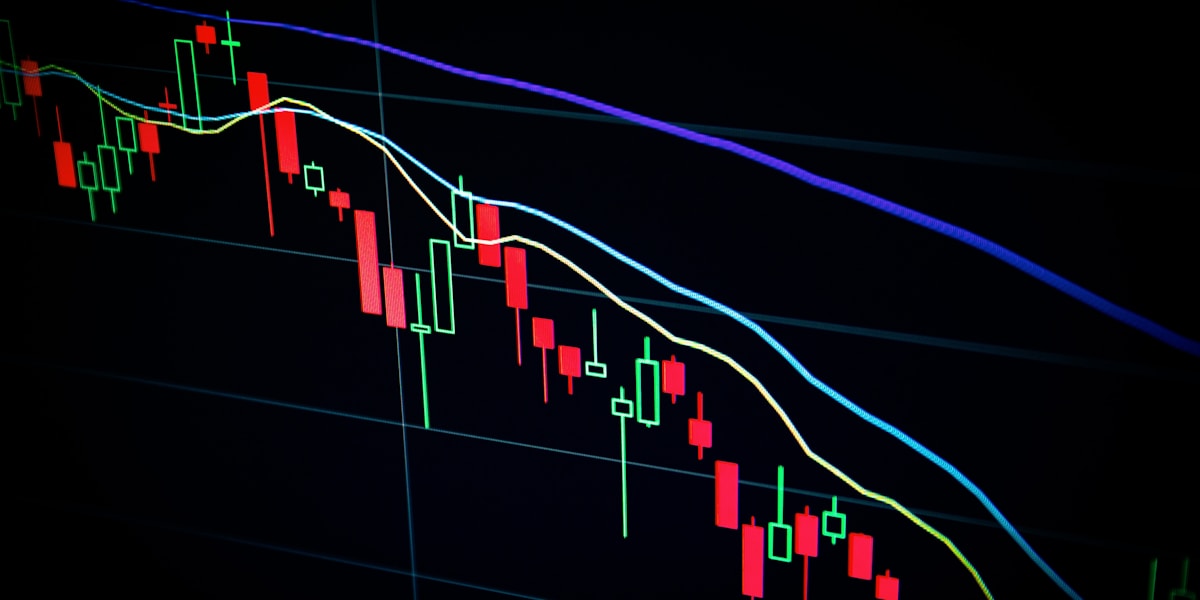
The trading technology landscape is bifurcating between traditional charting tools and AI-driven decision engines. Photographer: Unsplash
The retail trading technology landscape has operated under a stable assumption for over a decade: give traders better charts, more indicators, and faster data, and they will make better decisions. TradingView, with its 90 million monthly visitors and community of 60 million registered users, epitomizes this philosophy. But a quieter shift is underway. Platforms like Crowly are asking a different question entirely: what if the AI made the decision?
The distinction matters because it reflects a broader tension in financial technology between tools that enhance human judgment and systems that aim to replace it. TradingView provides the telescope; Crowly claims to provide the navigator.
The Established Order: TradingView
Founded in 2011 by a team of traders and software developers, TradingView has become the de facto standard for retail charting. The platform supports over 150 exchanges globally, covering stocks, forex, cryptocurrencies, futures, bonds, and ETFs. Its HTML5-based charts render across devices without installation, a technical achievement that helped displace desktop-bound predecessors like MetaTrader.
TradingView's competitive moat lies in its community. Over 100,000 custom indicators and strategies, created using the platform's proprietary Pine Script language, form a self-reinforcing ecosystem. When experienced traders publish profitable strategies, they attract followers who increase platform engagement, which attracts more strategy creators. This flywheel effect has proven difficult for competitors to replicate.
The platform monetizes through tiered subscriptions ranging from free (with limitations) to Premium at approximately $60 per month, plus revenue from broker integrations and advertising. Its breadth serves everyone from casual crypto watchers to professional fund managers screening global markets.
The Challenger: Crowly
Crowly represents a fundamentally different hypothesis about what traders need. Rather than providing tools for analysis, it provides analysis itself. The platform deploys what it terms a "multi-agent AI system"—multiple artificial intelligence models operating simultaneously on the same data, each contributing a different analytical perspective.

Crowly's approach uses multiple AI models working in parallel, each analyzing different dimensions of market data. Photographer: Unsplash
The architecture includes GPT-4 for pattern recognition, Claude for risk assessment, DeepSeek for quantitative analysis, Gemini for sentiment evaluation, and Grok for market regime classification. Each model processes identical market data independently before results are synthesized into consensus signals—a methodology borrowed from ensemble learning in machine learning research.
| Feature | TradingView | Crowly |
|---|---|---|
| Primary Function | Charting & Analysis Tools | AI-Generated Trading Signals |
| AI Integration | Limited (community scripts) | Core (5 AI models) |
| Hedge Fund Tracking | Not available | Real-time 13F monitoring |
| Asset Coverage | Global multi-asset | US equities focused |
| Custom Indicators | 100,000+ (Pine Script) | AI-driven (no coding) |
| Community Size | 60M+ registered users | Growing startup |
| Backtesting | Built-in (Pine Script) | AI-optimized backtester |
| Price (Premium) | ~$60/month | Free tier + Premium |
| Broker Integration | 30+ brokers | Multiple via SnapTrade |
| Mobile App | iOS & Android | Web-based responsive |
The Intelligence Layer
Crowly's differentiator—the feature that positions it as something other than a TradingView clone—is its institutional data integration. The platform monitors SEC 13F filings, tracking positions held by major hedge funds including Citadel, Renaissance Technologies, Bridgewater Associates, and dozens more. This data, typically the domain of Bloomberg Terminal subscribers paying $24,000 annually, becomes accessible through Crowly's interface at a fraction of the cost.
The system classifies market conditions into regimes—StrongUp, WeakUp, Sideways, WeakDown, StrongDown—and adjusts recommendations accordingly. During StrongUp regimes, the system might recommend larger position sizes with trailing stops; during WeakDown conditions, it may suggest hedging strategies or cash preservation. This dynamic adaptation contrasts with TradingView's static indicators, which require manual interpretation across market conditions.
Where TradingView requires traders to configure alerts manually, Crowly's AI monitors positions continuously and delivers real-time updates across web, mobile, email, and SMS channels. The system tracks over 50 hedge funds, alerting users when institutional capital enters or exits positions—a capability absent from TradingView's feature set.
The platform targets active US equities traders specifically, rather than TradingView's global, multi-asset audience. This narrower focus enables deeper specialization in American market microstructure and regulatory filings.
The Philosophical Divide
The contrast extends beyond features to fundamental assumptions about trader behavior. TradingView operates on the premise that given sufficient tools, traders will perform their own analysis competently. Its 100,000-indicator library and extensive customization options serve users who want control over every analytical parameter.
Crowly assumes the opposite: that most retail traders lack the time, expertise, or discipline to analyze markets consistently. By delivering pre-computed signals, the platform removes interpretive burden. Users need not understand why StrongUp conditions exist—only that the AI has classified the regime and generated an execution playbook.
This divergence mirrors broader trends in fintech. Robo-advisors displaced human wealth managers by automating portfolio allocation. Algorithmic trading systems now execute the majority of equity volume. Crowly extends this automation to the retail analysis layer that TradingView leaves untouched.
The approach carries risks. Black-box recommendations can erode traders' market understanding, creating dependence on systems they cannot interrogate. If Crowly's models degrade or encounter regime changes, users may lack the foundational skills to recognize deteriorating performance.

The debate centers on whether traders should interpret their own data or rely on algorithmic decision support. Photographer: Unsplash
TradingView's transparency—where every indicator's calculation is visible and customizable—preserves trader agency. But agency without expertise can be dangerous. Retail traders consistently underperform market benchmarks; tools that democratize complexity may simply democratize losses.
Market Positioning and Economics
Pricing structures reflect these different philosophies. TradingView monetizes through subscription tiers based on feature access, with Premium users paying $60 monthly for maximum capabilities. Additional costs apply for real-time exchange data, which can reach hundreds annually for comprehensive coverage.
Crowly offers both free and premium tiers. As a startup competing against an established incumbent, the platform pursues penetration pricing to build market share. Its narrower asset focus (US equities only) reduces data licensing costs compared to TradingView's global coverage.
The total addressable market differs substantially. TradingView serves retail traders, institutional investors, and market hobbyists globally across stocks, forex, crypto, futures, and bonds. Crowly targets specifically active US equity traders—a subset measured in millions rather than hundreds of millions.
Yet this focus could prove advantageous. Institutional trading platforms like Bloomberg Terminal demonstrate that depth in a specific domain commands premium pricing. If Crowly's AI genuinely improves trader outcomes, retention rates and willingness-to-pay may exceed TradingView's broad-but-shallow model.
The Integration Question
A practical consideration: these platforms need not be mutually exclusive. Crowly itself acknowledges this, stating "Best approach? Use both. TradingView for detailed charting when you need it. Crowly for AI signals, whale tracking, and quick stock screening."
This suggests a complementary relationship where TradingView handles visualization and custom analysis while Crowly provides decision support. Professional traders often deploy multiple platforms simultaneously—combining Bloomberg Terminal's news with Interactive Brokers' execution and TradingView's charts.

Professional traders frequently use multiple platforms simultaneously for different analytical purposes. Photographer: Unsplash
For retail users, however, cost constraints limit platform stacking. A trader paying $60 monthly for TradingView Premium may hesitate to add another subscription. Crowly must therefore demonstrate sufficient incremental value to justify portfolio inclusion alongside, rather than instead of, established tools.
Performance and Validation
TradingView's value proposition requires no proof beyond functionality. Charts either display correctly or they do not; indicators calculate accurately or they contain errors. Users can immediately verify whether the platform meets their needs.
Crowly's AI-driven recommendations demand longitudinal validation. The claimed 85% accuracy must be tested across market regimes, with performance attribution separating signal quality from market beta. Transparency regarding drawdown periods, false signals, and edge decay becomes essential for evaluating whether AI adds genuine alpha.
Third-party validation through academic studies, audited performance reports, or regulatory registration would materially strengthen Crowly's credibility versus self-reported accuracy figures.
The Competitive Landscape
Neither platform operates in isolation. TradingView faces competition from thinkorswim, Interactive Brokers' Trader Workstation, and specialized charting software like NinjaTrader. Its network effects—the community-generated indicators and shared analysis—create switching costs that protect market position.
Crowly competes with AI-focused platforms including TipRanks, Trade Ideas, and Danelfin, each offering algorithmic stock screening and recommendation engines. The hedge fund tracking feature differentiates Crowly within this cohort, though services like WhaleWisdom and Dataroma provide similar institutional positioning data.
Brokerage platforms increasingly integrate AI features natively. Charles Schwab, Fidelity, and Robinhood have announced machine learning initiatives for trade recommendations and portfolio optimization. If major brokers bundle AI analysis directly into execution platforms, standalone services like Crowly face disintermediation risk.
Regulatory Considerations
Automated trading recommendations occupy uncertain regulatory territory. The SEC requires Registered Investment Advisors to maintain fiduciary duty when providing personalized investment advice. Whether Crowly's AI-generated signals constitute "advice" triggering RIA registration remains ambiguous.

Regulatory questions surrounding AI-generated trading recommendations remain unresolved as platforms scale. Photographer: Unsplash
TradingView avoids this complexity by positioning as analytical software rather than advisory service. Its terms of service explicitly disclaim investment recommendations, placing liability entirely on users.
The Verdict
TradingView and Crowly represent different visions of retail trading's future. TradingView provides comprehensive infrastructure for self-directed analysis; Crowly offers algorithmic decision support for traders seeking guidance.
For sophisticated traders comfortable with technical analysis, TradingView's depth and flexibility justify its position as industry standard. The platform's charting capabilities, community resources, and multi-asset coverage serve users from casual investors to professional money managers.
For time-constrained traders seeking systematic signals, Crowly's AI-driven approach offers potential efficiency gains. If the models perform as claimed, users gain institutional-quality analysis without the expertise barrier. The hedge fund tracking and regime classification provide features unavailable in traditional charting platforms.
The ideal outcome may not involve a winner. Markets accommodate multiple participant types with varying skill levels, time horizons, and analytical preferences. TradingView serves those who want full control; Crowly serves those willing to delegate judgment to algorithms. Both can coexist, and sophisticated users may employ both in complementary roles.
What remains certain is that artificial intelligence will increasingly mediate retail trading decisions. Whether that manifests through pattern recognition tools within traditional platforms or autonomous recommendation engines like Crowly, the competitive question is not if AI transforms analysis, but how completely—and whether human oversight retains meaningful authority in an algorithmic age.