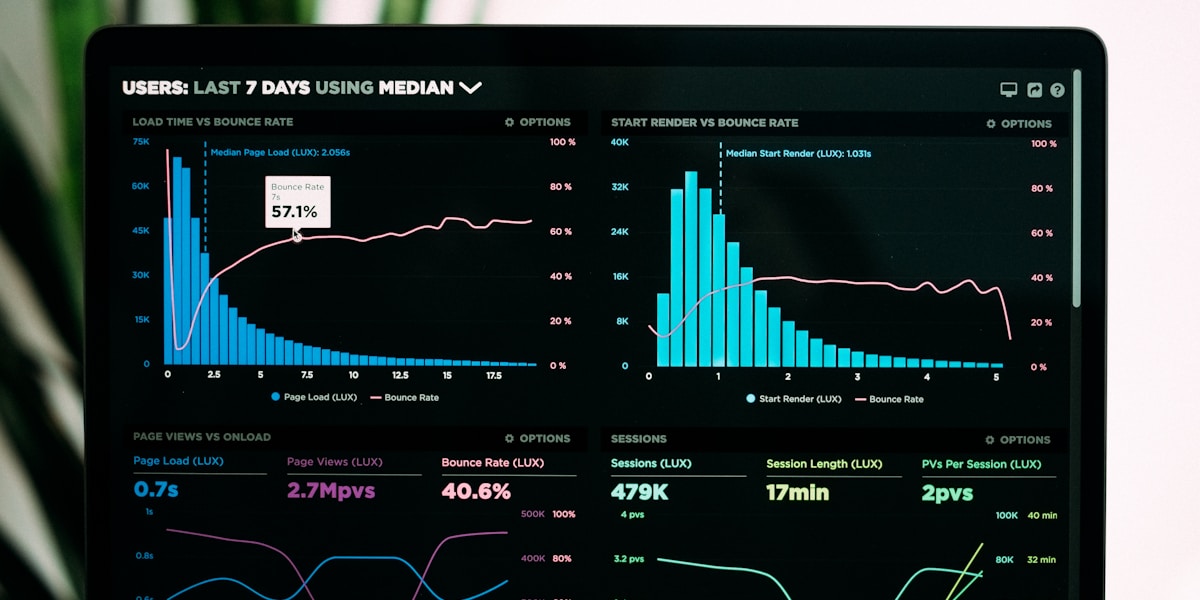
Crowly and TIKR represent fundamentally different philosophies: AI-driven automation versus human-directed fundamental analysis. Photographer: Unsplash
Table of Contents
Two investment platforms—Crowly and TIKR—pursue opposite strategies in retail trader empowerment. Crowly employs five parallel artificial intelligence models to generate explicit buy/sell/hold recommendations, automating analysis that historically required hours of manual research. TIKR provides institutional-grade research infrastructure—20 years of financial data, analyst estimates, transcripts, and superinvestor tracking—enabling self-directed fundamental analysis previously accessible only through Bloomberg Terminal's $24,000 annual subscription.
The contrast reflects broader tension within investment technology: Should platforms automate decision-making through algorithms, or provide sophisticated tools for human judgment? Crowly answers "automate"—tracking hedge funds, processing sentiment, analyzing technicals, and delivering signals with confidence scores and stop-loss levels. TIKR answers "empower"—offering data depth, visualization tools, and screening capabilities that let investors conduct independent research.
This comparison examines both platforms across features, pricing, target audiences, and philosophical approaches. The verdict reveals that "which is better" depends entirely on investor type, time availability, and analytical preferences—with minimal overlap between ideal user profiles.
Executive Summary: The Philosophical Divide
Crowly: The AI Decision Engine
"Don't analyze stocks yourself. Let AI do it for you."
Core Value Proposition: Crowly processes technical indicators, fundamental metrics, news sentiment, social media signals, and institutional positioning through five AI models to generate execution-ready trading signals. Users receive explicit recommendations—buy TSLA at $245, stop at $235, target $270—without conducting independent analysis. The platform integrates 13F hedge fund tracking across 50+ billionaire portfolios, identifying smart money consensus and position changes.
Target User: Active traders seeking algorithmic guidance, institutional flow followers, time-constrained professionals wanting decision support rather than research tools.
TIKR: The Research Infrastructure
"Bloomberg Terminal capabilities at 3% of the cost."
Core Value Proposition: TIKR delivers institutional-grade research data—100,000+ global stocks, 20 years of financial history, Wall Street analyst estimates, earnings transcripts, SEC filings, and superinvestor portfolio tracking—through an intuitive interface at $55/month versus Bloomberg's $2,000/month. Users conduct independent fundamental analysis using professional tools, building custom valuation models and screening for opportunities matching their criteria.
Target User: Fundamental investors conducting deep due diligence, value investors analyzing financial statements, DIY investors wanting professional data without institutional pricing.
The platforms compete minimally for identical users. Crowly attracts algorithm-followers, day traders, and swing traders seeking tactical entries based on AI recommendations. TIKR serves long-term fundamental investors, value seekers, and quality-focused position builders conducting months of research before committing capital. Overlay exists primarily in 13F tracking—both platforms monitor hedge fund holdings—but even this functionality serves different purposes: Crowly for consensus signals, TIKR for deep portfolio analysis.
| Dimension | Crowly | TIKR | Winner |
|---|---|---|---|
| Primary Function | AI signal generation | Research data infrastructure | Tie (different purposes) |
| Decision Automation | Explicit buy/sell signals | None (user analyzes) | Crowly |
| Data Depth | Real-time technical + sentiment | 20 years financial history | TIKR |
| Global Coverage | US equities only | 100,000+ global stocks | TIKR |
| 13F Tracking | 50+ funds, real-time alerts | 10,000+ investors, deep analysis | Tie (different approaches) |
| Learning Curve | Minimal (receive signals) | Steep (learn tools) | Crowly |
| Time Investment | Minutes (execute signals) | Hours (conduct research) | Crowly |
| Pricing Transparency | Free tier clear; paid undisclosed | Fully transparent ($0-$55/mo) | TIKR |
| Track Record | 8 months operational (unaudited) | 5+ years, 300,000+ users | TIKR |
| Best For | Active traders, algo-followers | Fundamental investors, analysts | Depends on user type |

The choice between AI automation and manual analysis reflects broader debates about human judgment versus algorithmic decision-making in investing. Photographer: Unsplash
Crowly: AI-Powered Decision Engine
Crowly launched June 2025 as an AI-native platform automating stock market analysis through machine learning models trained on technical indicators, fundamental metrics, sentiment data, and institutional positioning. The platform targets retail traders overwhelmed by information abundance—those lacking time or expertise for independent research but seeking better returns than passive index investing.
Core Capabilities
AI Signal Generation
- 5 parallel AI models
- Buy/Sell/Hold recommendations
- Confidence scores (0-100%)
- ATR-based stop-loss levels
- Price targets with timeframes
- Daily signal updates
Market Regime Analysis
- Premarket regime classification
- StrongUp/StrongDown/Chop labels
- Volatility environment assessment
- Position sizing guidance
- Risk-on/risk-off signals
- Historical accuracy tracking
13F Hedge Fund Tracking
- 50+ tracked funds ($2.1T AUM)
- Real-time filing alerts
- Position change analysis
- Multi-fund consensus detection
- Conviction scoring by size
- Free tier access (no paywall)
Multi-Channel Alerts
- Web dashboard notifications
- Mobile app push alerts
- Email signal delivery
- SMS text alerts (premium)
- Customizable alert criteria
- Instant 13F filing alerts
The AI models process five data categories: (1) Technical Analysis—200-day moving averages, RSI, MACD, volume patterns, support/resistance levels; (2) Fundamental Metrics—P/E ratios, revenue growth, profit margins, debt levels, cash flows; (3) Sentiment Analysis—news article tone, social media signals, analyst rating changes, options flow; (4) Institutional Positioning—13F filings, position changes, multi-fund consensus, hedge fund concentration; (5) Market Context—sector performance, correlation structures, volatility regime, macro conditions.
Output signals include explicit entry prices, stop-loss levels calculated using Average True Range (ATR) for volatility-adjusted risk management, and price targets with expected timeframes. Users can act mechanically on recommendations without understanding underlying analysis—the platform's intended use case for time-constrained traders.
Performance Claims & Validation Gaps
Crowly claims 85% signal accuracy without disclosing methodology, measurement criteria, or independent auditing. The platform launched June 2025, providing eight months of track record—insufficient for statistical significance or full market cycle validation. Questions remain unanswered: accuracy of what (direction, magnitude, risk-adjusted return), measured against what benchmark, over what timeframe, accounting for survivorship bias or data mining?
Without third-party verification, regulatory registration as investment advisor (RIA), or transparent backtest methodology, performance claims remain marketing assertions rather than validated track records. Sophisticated traders require audited results, disclosed assumptions, and stress-tested robustness before trusting capital to black-box algorithms.
Critical Gap: Track Record Verification
Eight months of operational history provides inadequate data for validating claimed 85% accuracy across market regimes. Without independent auditing, regulatory oversight, or methodology disclosure, Crowly's performance assertions lack verifiability required for informed capital allocation decisions. Users effectively serve as beta testers for unproven systems.
Free vs Premium Tiers
Crowly's free tier includes complete 13F hedge fund tracking, basic market regime visibility, and limited AI signal access (specific quantity undisclosed). Premium pricing remains undisclosed publicly—an unusual opacity suggesting early-stage pricing experimentation or deliberate qualification of serious users through inquiry.
Premium benefits likely include unlimited AI signals, full market regime analysis with historical data, real-time multi-channel alerts across web/mobile/email/SMS, ATR-based stop-loss and target levels, institutional flow analytics, and priority signal delivery. Without published pricing, comparison shopping proves impossible.
TIKR: Institutional-Grade Research Platform
TIKR Terminal launched 2018 as "Bloomberg for retail investors"—delivering institutional research infrastructure at consumer pricing. The platform aggregates S&P Global Market Intelligence data (the same source powering Bloomberg Terminal) and presents it through modern interfaces accessible to non-professionals. Five years of operation and 300,000+ users demonstrate product-market fit within fundamental research niches.
Core Capabilities
Financial Data Depth
- 20 years historical financials
- Income statements, balance sheets
- Cash flow statements
- Segment-level breakdowns
- Quarterly and annual data
- Custom metric calculations
Analyst Estimates & Consensus
- Wall Street analyst forecasts
- Revenue and EPS estimates
- Forward guidance metrics
- Price target aggregation
- Rating distribution (buy/hold/sell)
- Estimate revision tracking
Valuation & Comparison Tools
- Forward and trailing multiples
- Peer group benchmarking
- Custom comp tables
- Valuation model templates
- Scenario analysis tools
- Historical valuation charts
Superinvestor Tracking
- 10,000+ investor portfolios
- Global holdings visibility
- Position size tracking
- Quarter-over-quarter changes
- Portfolio concentration analysis
- Historical position evolution
TIKR covers 100,000+ securities across 92 countries—US equities, international exchanges, emerging markets, small-cap companies—providing global portfolio construction capabilities absent from US-focused competitors. Data sources include S&P Global Market Intelligence, company filings, exchange feeds, and third-party research aggregation.
The platform's screening infrastructure enables multi-factor quantitative searches: "companies with ROIC above 15%, P/E ratios below sector median, consistent dividend growth over 10 years, debt-to-equity under 0.5, and insider buying in the last quarter." Results display instantly with financial data, charts, and peer comparisons for rapid evaluation.
Pricing Tiers & Transparency
TIKR maintains complete pricing transparency—a sharp contrast with Crowly's undisclosed premium costs:
TIKR Free
- US stock coverage
- Basic financial data
- Limited historical depth
- Screening capabilities
- Company snapshots
- Basic watchlists
TIKR Plus
- Global stock coverage
- 15+ years financials
- Analyst estimates
- Earnings transcripts
- Advanced screening
- Superinvestor tracking
TIKR Pro
- All Plus features
- 20 years financials
- Excel export capability
- Advanced analytics
- Custom valuation models
- Priority support
Crowly Premium
- Unlimited AI signals
- Full market regime data
- Multi-channel alerts
- Stop-loss & targets
- Advanced 13F analytics
- Priority signal delivery
TIKR's pricing positions Pro tier at $660 annually—roughly 3% of Bloomberg Terminal's $24,000 annual cost while delivering 70-80% of relevant functionality for retail investors. The value proposition targets serious self-directed investors managing $50,000+ portfolios where tool costs represent under 2% of capital—easily justified if platform enables better security selection or risk avoidance.
TIKR provides institutional-grade financial data and research tools at consumer pricing, democratizing analysis previously requiring Bloomberg Terminal subscriptions. Photographer: Unsplash
User Experience & Learning Curve
TIKR requires investment in learning—navigating interfaces, understanding financial metrics, interpreting data relationships. The platform provides tools but demands user competence in fundamental analysis, valuation methodologies, and financial statement interpretation. New users face 10-20 hours of familiarization before achieving proficiency.
This learning curve serves as feature rather than bug for target users: serious investors wanting to understand businesses deeply before committing capital. The platform attracts users reading 10-Ks, building spreadsheet models, and conducting months-long research before taking positions—investors for whom shortcuts through AI signals feel uncomfortable.
Established Market Position
TIKR's five-year operational history, 300,000+ user base, and transparent pricing demonstrate product-market fit within fundamental research segments. The platform survived competitive pressure from established players (Bloomberg, FactSet, S&P Capital IQ) and newer entrants, validating sustainable value proposition at consumer price points.
Feature-by-Feature Comparison
| Feature Category | Crowly | TIKR | Analysis |
|---|---|---|---|
| AI/Automation | 5 AI models, explicit signals | None (manual analysis) | Crowly exclusive advantage for algorithm followers |
| Financial Data | Real-time fundamentals (basic) | 20 years detailed financials | TIKR vastly superior for fundamental analysis |
| Global Coverage | US equities only | 100,000+ stocks (92 countries) | TIKR essential for international diversification |
| 13F Tracking | 50+ funds, real-time alerts, consensus | 10,000+ investors, deep portfolio analysis | Crowly better for alerts; TIKR better for research |
| Analyst Estimates | Not available | Comprehensive Wall Street consensus | TIKR provides critical forward-looking data |
| Transcripts & Filings | Not available | Full earnings calls, SEC filings | TIKR enables primary source research |
| Screening | AI-driven recommendations only | Advanced multi-factor screener | TIKR enables custom opportunity identification |
| Valuation Tools | Basic (for signals only) | Professional models, comp analysis | TIKR supports sophisticated valuation work |
| Technical Analysis | Integrated in AI (opaque) | Basic charts only | Neither excels; dedicated charting tools superior |
| Risk Management | ATR stop-losses, position sizing | None (user determines) | Crowly provides tactical risk parameters |
| Portfolio Tracking | Signal execution tracking | Watchlists, performance monitoring | TIKR better for long-term position management |
| Mobile Experience | Full-featured app with alerts | Mobile-optimized web | Crowly superior for on-the-go signal delivery |
| Learning Curve | Minimal (receive signals) | Steep (learn fundamental analysis) | Depends on user preference and skill level |
| Time Investment | Minutes per day (execute signals) | Hours per position (deep research) | Reflects completely different investment approaches |
| Transparency | Black-box AI, undisclosed pricing | Full data transparency, clear pricing | TIKR vastly superior in transparency and disclosure |
| Track Record | 8 months (unaudited claims) | 5+ years (300k users) | TIKR established; Crowly unproven |
Ideal User Profiles
Choose Crowly If You Are:
- Algorithm-Following Trader: Comfortable executing signals from black-box systems without understanding underlying analysis
- Time-Constrained Professional: Lack hours for deep research but want better returns than passive indexing
- Institutional Flow Follower: Primary strategy involves following hedge fund 13F filings with real-time alerts
- Day/Swing Trader: Need tactical entry/exit signals with stop-losses for shorter-term positions
- Decision-Adverse: Prefer being told what to trade rather than making independent choices
- Technical-First: Prioritize price action and momentum over fundamental business analysis
- Early Adopter: Willing to beta-test unproven AI systems for potential alpha discovery
Choose TIKR If You Are:
- Fundamental Investor: Analyze businesses through financial statements, competitive positioning, and management quality
- Value Seeker: Identify undervalued securities through quantitative screening and deep valuation work
- Long-Term Holder: Build concentrated positions held for years based on conviction developed through research
- Global Investor: Require international market coverage beyond US equities
- DIY Analyst: Enjoy research process and want professional tools for independent analysis
- Quality-Focused: Prioritize business quality, management competence, and competitive moats over signals
- Risk-Averse: Uncomfortable trusting capital to unproven black-box algorithms

The choice between Crowly and TIKR reflects fundamental differences in investment philosophy, time availability, and analytical preferences. Photographer: Unsplash
Verdict: Which Platform Wins?
No universal winner emerges because Crowly and TIKR serve fundamentally different user populations with minimal overlap. The platforms compete in name only—their actual utility addresses opposite investor needs.
Crowly Wins For: Active Traders Seeking Automation
If you lack time for deep research, prefer algorithmic guidance over independent analysis, and trade frequently based on tactical signals, Crowly delivers unique value unavailable elsewhere. Real-time 13F alerts combined with AI signals create differentiated offering for institutional flow followers wanting execution speed. Risk: unproven track record and black-box methodology create substantial uncertainty about long-term viability.
TIKR Wins For: Fundamental Investors Conducting Research
If you invest based on business quality, financial analysis, and long-term conviction developed through independent research, TIKR provides institutional-grade tools at consumer pricing. Twenty years of financial data, global coverage, analyst estimates, and transcripts enable sophisticated analysis previously requiring Bloomberg Terminal subscriptions. Established track record and transparent pricing reduce adoption risk materially.
The Incompatibility Problem
Investors requiring both platforms simultaneously likely lack coherent investment philosophy. Algorithm-followers and deep fundamental analysts represent opposite archetypes with incompatible approaches. Users attracted to Crowly's automation typically find TIKR's research depth unnecessary; users valuing TIKR's analytical tools typically distrust Crowly's black-box signals. Attempting to combine both suggests strategic confusion rather than diversification.
Hybrid Approach: Possible But Difficult
Theoretically, investors could use TIKR for long-term core holdings requiring deep research and Crowly for tactical satellite positions based on AI signals. This hybrid approach demands: (1) Mental compartmentalization between systematic algorithms and discretionary analysis; (2) Position sizing discipline preventing AI signals from overwhelming research-based core; (3) Performance attribution tracking to measure which approach delivers returns; (4) Tolerance for philosophical inconsistency between decision frameworks.
Most investors lack discipline for successful hybrid execution. Cognitive biases—recency bias favoring recent winners, loss aversion creating paralysis after losses—contaminate decision-making across strategies. Clean separation proves psychologically difficult when AI signals contradict fundamental analysis or vice versa.
Frequently Asked Questions
Can I use both Crowly and TIKR together?
Technically yes, but strategically questionable. The platforms serve opposite philosophies—AI automation versus manual research. Successfully combining both requires clear separation: perhaps TIKR for long-term core holdings (80% of capital) and Crowly for tactical trades (20% of capital). Without discipline, mixing approaches creates confusion and inconsistent decision-making that undermines both strategies.
Which platform is better for beginners?
Crowly offers lower learning curve—receive signals and execute without understanding analysis. TIKR requires learning fundamental analysis, financial metrics, and valuation methodologies. However, "easier" differs from "better for learning." Beginners relying exclusively on Crowly's signals never develop independent analysis skills. TIKR forces skill development through research tools. Long-term investor success typically requires fundamental competence that algorithm-following prevents building.
How accurate is Crowly's claimed 85% signal accuracy?
Unknown. Crowly provides no methodology disclosure, independent auditing, or verification of claimed 85% accuracy. The platform launched June 2025, offering only eight months of track record—insufficient for statistical validation. Without transparency about measurement criteria (accuracy of direction, magnitude, risk-adjusted returns?), benchmarks, or third-party verification, the 85% claim remains unverifiable marketing assertion rather than validated performance.
Is TIKR really comparable to Bloomberg Terminal?
For core equity research functionality, yes. TIKR delivers 70-80% of Bloomberg's equity analysis capabilities (financial data, analyst estimates, transcripts, screening) at 3% of cost ($55/month vs $2,000/month). Bloomberg superiority lies in breadth—fixed income, commodities, derivatives, real-time market data, advanced charting, news terminals, messaging. For self-directed investors focused on equity fundamental analysis, TIKR provides sufficient depth at accessible pricing.
Does Crowly's 13F tracking justify subscribing just for that feature?
Possibly, especially given free-tier access. Crowly's real-time 13F filing alerts and multi-fund consensus detection provide genuine value for institutional flow followers. Competitors like WhaleWisdom charge $39-199/month for similar functionality. If 13F tracking alone meets your needs, Crowly's free tier delivers substantial value. However, AI signals remain platform's primary offering—13F tracking serves as lead generation for premium upsell.
Which platform offers better value for money?
TIKR demonstrates clear value: $55/month for institutional-grade data with transparent ROI potential (one good investment decision pays for years of subscription). Crowly's undisclosed premium pricing prevents value assessment—opacity suggests either price discrimination strategy or early-stage experimentation. Without published rates, comparison shopping proves impossible. TIKR wins on transparency and established value proposition.
Can I trust AI trading signals from Crowly?
Insufficient information exists for informed trust decision. Eight months of operational history, unaudited performance claims, black-box methodology, and undisclosed pricing create significant uncertainty. Crowly lacks regulatory oversight (no RIA registration), independent performance auditing, or transparent model documentation. Users effectively beta-test unproven systems with real capital. Risk-averse investors should demand longer track records and third-party verification before trusting substantial capital to algorithmic recommendations.
Conclusion: Philosophy Over Features
Crowly versus TIKR represents deeper conflict than platform comparison—it embodies fundamental disagreement about investing itself. Should retail traders automate decisions through artificial intelligence, trusting algorithms to process complexity beyond human analytical capacity? Or should they develop independent research competence using professional tools that empower rather than replace judgment?
Neither answer universally correct. Algorithm-followers may achieve superior returns if Crowly's AI models genuinely capture patterns invisible to fundamental analysis—or catastrophic losses if models fail during regime shifts absent from training data. Fundamental analysts may build sustainable edge through business understanding and valuation discipline—or waste hours researching while missing opportunities that AI systems identify instantly.
The verdict depends entirely on self-assessment: Do you trust algorithms or prefer independent analysis? Do you lack time for research or enjoy deep-dive due diligence? Do you trade tactically or invest long-term? Do you follow institutional flows or ignore smart money? Your answers determine which platform—if either—serves your needs.
Ready to Choose Your Path?
Crowly offers AI-powered trading signals + free 13F tracking. TIKR provides institutional research data at retail pricing. Both free tiers available for testing before commitment.
Try Crowly Free →Most importantly: platforms serve as tools, not strategies. Crowly's AI signals require position sizing discipline, risk management, and portfolio construction that algorithms don't provide. TIKR's research data remains useless without analytical skill, valuation competence, and behavioral discipline. Neither platform guarantees success—both merely enable informed execution of coherent investment philosophies that users must develop independently.