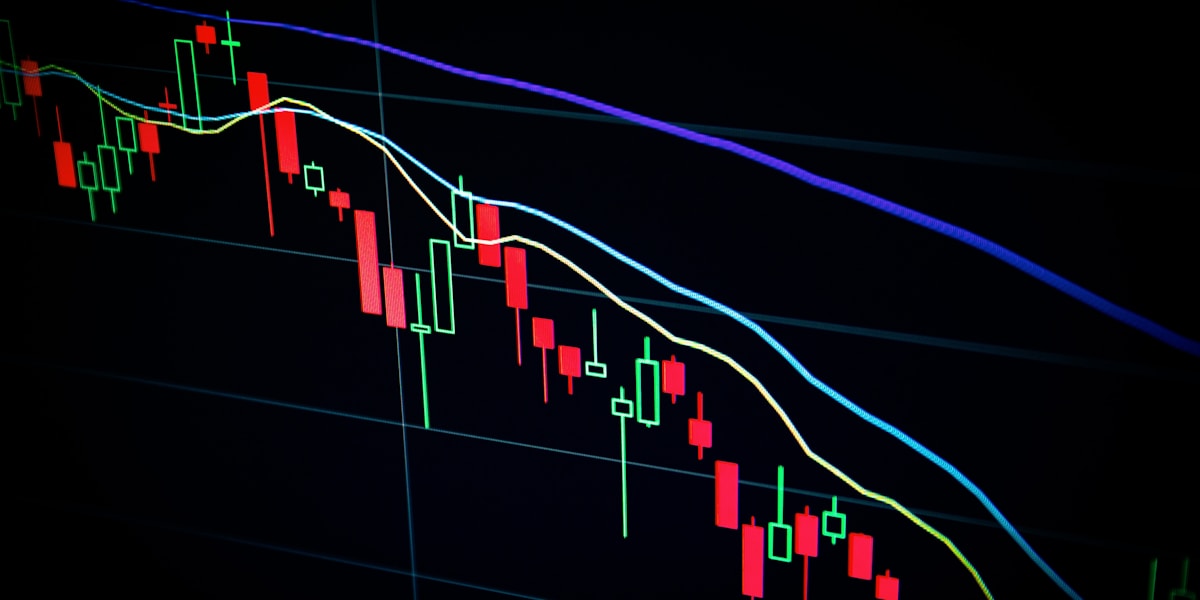
Finviz's visual paradigm—heat maps, screeners, and pattern recognition—faces disruption from AI systems that automate interpretation itself. Photographer: Unsplash
Finviz transformed retail stock research when it launched in 2007, bringing institutional-grade visualization to individual investors through intuitive heat maps and powerful screening engines. For nearly two decades, its color-coded sector grids and 70+ filter combinations have defined how millions of traders identify opportunities across thousands of securities simultaneously.
Crowly proposes rendering this visual infrastructure obsolete. Rather than empowering investors to spot patterns in market data, its AI models perform pattern recognition autonomously—delivering explicit buy/sell signals without requiring users to interpret heat maps, screen results, or chart formations. Where Finviz asks "what does the market look like?", Crowly answers "what should I buy today?"
The competition exposes a fundamental tension in fintech evolution: whether retail trading advances through better visualization tools that enhance human judgment, or through algorithmic systems that replace it entirely.
The Visualization Empire
Finviz's dominance derives from elegant simplicity. The platform's heat maps display market-wide performance through color-coded grids where each square represents a stock, sized by market capitalization and colored by price change. Green indicates gains; red signals losses; color intensity reflects magnitude. A single glance reveals sector rotation, industry momentum, and individual outlier performance across the entire S&P 500.
The screener—Finviz's core functionality—enables multi-factor filtering across fundamental metrics (P/E ratio, debt-to-equity, dividend yield), technical indicators (RSI, moving averages, chart patterns), and descriptive parameters (sector, market cap, average volume). Users construct complex queries combining criteria in seconds through dropdown menus.
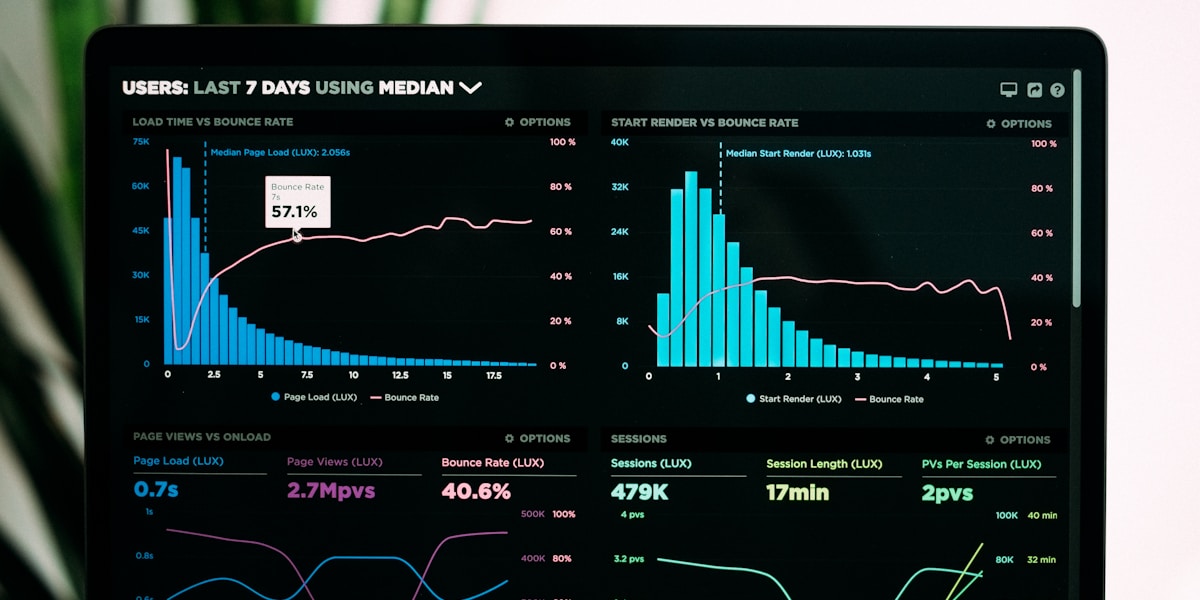
Finviz's heat maps enable pattern recognition at scale, displaying thousands of stocks simultaneously through color-coded visualization. Photographer: Unsplash
The platform's free tier—remarkably comprehensive for zero-cost access—provides full screener functionality with 70+ filters, basic charts, news aggregation, insider trading data, and portfolio tracking for up to 50 portfolios. Data updates arrive with 15-minute delay, acceptable for swing traders with multi-day holding periods.
Finviz Elite, priced at $39.50 monthly ($24.96 monthly when billed annually at $299.50), eliminates delays through real-time quotes and intraday charting. Elite subscribers access advanced technical analysis with candlestick patterns, Fibonacci retracements, and custom time intervals. Backtesting functionality validates screening strategies across historical periods. Email and SMS alerts notify users when stocks meet specified criteria.
Finviz's user experience prioritizes speed. The site loads instantly even on modest connections, with heat maps rendering thousands of data points in milliseconds. The platform covers US equities, ETFs, futures, forex pairs, and cryptocurrencies.
The AI Decision Engine
Crowly dispenses with visualization as primary interface. While the platform displays charts and data, its core value proposition centers on algorithmic signal generation. Five parallel AI models ingest technical indicators, fundamental metrics, sentiment analysis from news and social media (Reddit WallStreetBets, Twitter/X), and institutional positioning via 13F hedge fund filings—synthesizing these inputs into explicit trade recommendations.

Crowly's multi-agent AI architecture processes disparate data streams—technical, fundamental, sentiment, institutional—to generate unified trading directives. Photographer: Unsplash
The platform's market regime classification provides structural context. Each trading session, Crowly categorizes overall market conditions as "StrongUp" (sustained bullish momentum), "StrongDown" (persistent bearish pressure), or "Chop" (range-bound, directionless action). This regime determines recommended position sizing, exposure limits, and risk parameters.
Individual stock signals include buy, sell, or hold classifications accompanied by confidence scores (60%, 75%, 90%). ATR-based stop-loss and profit target levels accompany each recommendation, providing mechanical exit criteria without discretionary judgment.
Real-time alert delivery spans web dashboard, mobile application, email, and SMS channels. The hedge fund tracking module monitors over 50 institutional investors including prominent managers like Bill Ackman, Carl Icahn, and David Tepper. Alerts notify users when these "smart money" players initiate or liquidate positions based on quarterly 13F filings.
Crowly targets active US equity traders operating on short-to-medium timeframes (days to weeks), contrasting with Finviz's broader appeal to swing traders, investors, and analysts across multiple holding periods.
Philosophical Divergence
The platforms embody incompatible theories regarding investor capability. Finviz assumes retail traders can competently analyze visual market data given appropriate tools. Its screeners, heat maps, and charts provide infrastructure for judgment—but judgment itself remains human.
The visual paradigm encourages pattern recognition as learned skill. Users repeatedly analyzing heat maps develop intuition for sector rotation, identifying when capital flows from defensive sectors into cyclicals. Screening experience builds understanding of which metric combinations predict performance.

Traditional visual analysis platforms assume investors will develop interpretive skills through repeated engagement with market data. Photographer: Unsplash
Crowly operates on opposing premises: that retail traders lack time, expertise, or psychological discipline for systematic analysis, and that machine learning models identify patterns in multi-dimensional data humans cannot process. This reflects quantitative hedge fund methodologies used by Renaissance Technologies, D.E. Shaw, and Two Sigma.
Yet democratization of complexity differs from democratization of understanding. Finviz users comprehend their screening logic. Crowly users receive buy signals generated through black-box processes they cannot interrogate. When signals fail, visual platform users can refine their criteria; algorithmic platform users can only wait for model recalibration they neither control nor understand.
Critical Risk Factor
Dependence on unexplained AI recommendations creates systemic vulnerability. If Crowly's models encounter market regimes absent from training data, performance may degrade catastrophically. Users lacking foundational skills cannot distinguish temporary underperformance from permanent edge decay.
Feature-Level Comparison
| Capability | Finviz | Crowly |
|---|---|---|
| Core Functionality | Visual screening & heat maps | AI signal generation |
| Screening Filters | 70+ customizable filters | AI-automated (no manual screening) |
| Heat Maps | Sector, industry, world markets | Not available |
| AI Capabilities | Pattern recognition alerts | 5-model ensemble with confidence scores |
| Trade Signals | User-configured alerts | Explicit buy/sell/hold recommendations |
| Market Regime | Manual interpretation required | StrongUp/StrongDown/Chop classification |
| Institutional Tracking | Insider transactions only | 50+ hedge funds (13F filings) |
| Backtesting | Elite: Screen strategy backtesting | AI-optimized backtester |
| Real-Time Data | Elite: $24.96/mo (annual) | Premium tier |
| Free Tier | Full screener, 15-min delayed | Limited signals |
| Alert Delivery | Email, SMS (Elite) | Web, mobile, email, SMS |
| Asset Coverage | US equities, ETFs, futures, forex, crypto | US equities only |
| Portfolio Tracking | 50 portfolios (free), unlimited (Elite) | Real-time position monitoring |
| Export/API | Elite tier only | Not disclosed |
| Learning Curve | Low (intuitive interface) | Very low (algorithmic automation) |
| Target Timeframe | Swing/position (multi-day) | Active (day/swing) |
Use Case Stratification
Finviz Optimal Users
- Swing traders (3-10 day holds)
- Systematic screeners using rule-based strategies
- Traders requiring rapid market overviews
- Visual learners comfortable with pattern recognition
- Multi-asset traders (stocks, ETFs, futures, forex)
- Budget-conscious traders (robust free tier)
- Researchers requiring export/API access
Crowly Optimal Users
- Active day/swing traders
- Traders seeking algorithmic decision support
- Time-constrained professionals
- Traders following institutional "smart money"
- Algorithm-followers comfortable with AI systems
- Momentum/trend followers
- Traders prioritizing speed over deep understanding

Visual screeners and AI signal generators serve fundamentally different trader psychologies and skill levels. Photographer: Unsplash
A technical analyst seeking breakout opportunities benefits enormously from Finviz's chart pattern recognition and real-time screener alerts. The analyst reviews charts, evaluates support/resistance levels, and enters positions based on discretionary judgment informed by systematic screening.
Conversely, a trader uncomfortable interpreting chart patterns or technical indicators benefits from Crowly's explicit directives. Receiving a buy signal with confidence score, stop-loss and target levels eliminates analytical burden. Execution becomes mechanical—follow the signal or don't.
Platform Complementarity
Sophisticated traders may employ both tools strategically: Finviz for market surveillance and opportunity identification, Crowly for confirmation and timing optimization. Screener results can be cross-referenced against Crowly signals to identify highest-conviction setups.
Performance Measurement Asymmetry
Finviz's value proposition requires no external validation. The platform either provides advertised screening filters, real-time data, and heat map visualization—or it does not. The platform makes no performance claims because it sells infrastructure, not recommendations.

AI signal platforms face validation requirements visual screeners avoid—proving recommendations generate alpha beyond market beta. Photographer: Unsplash
Crowly's signal-based model demands rigorous performance auditing. The 85% accuracy claim requires specification across multiple dimensions. Without methodological transparency, performance assertions remain unverifiable marketing statements.
Economic and Business Model Analysis
Finviz operates on transparent subscription economics. The free tier generates revenue through display advertising and affiliate relationships. The Elite tier ($299.50 annually) monetizes through subscriptions. This model has sustained operations for 19 years, indicating proven product-market fit.

Finviz's freemium model sustains 19-year operations; Crowly's undisclosed pricing suggests early-stage business model iteration. Photographer: Unsplash
Crowly's business model remains less transparent. Early-stage startups frequently subsidize user acquisition through venture capital. However, narrower focus enables premium pricing if value proposition proves compelling. If Crowly's AI genuinely improves trading outcomes, retention rates could justify premium pricing exceeding Finviz Elite's $300 annually.
Regulatory and Liability Considerations
Finviz occupies clear regulatory territory as a data and tools provider making no investment recommendations. Crowly's explicit buy/sell signals with confidence scores navigate more ambiguous waters regarding SEC registration requirements.
Regulatory Uncertainty
The SEC's 2026 proposed guidance on algorithmic trading platforms remains pending. Increased fintech scrutiny suggests stricter oversight forthcoming, particularly for platforms marketing specific performance claims.
Competitive Landscape
Finviz competes primarily with TradingView (charting and screeners), Stock Rover (fundamental screening), and brokerage-integrated tools. Its competitive advantages include speed, simplicity, and free-tier generosity.

Both platforms face competition from brokerage-integrated tools threatening standalone research platform economics. Photographer: Unsplash
Within the AI signal category, Crowly competes with Trade Ideas ($118 monthly), TipRanks ($29.95 monthly), and MarketAlerts.ai. Brokerage platforms increasingly bundle research tools natively, threatening standalone platforms. Finviz maintains advantage through specialization. Crowly's edge requires demonstrating AI performance surpassing simple technical indicators available free elsewhere.
The Verdict
Finviz and Crowly represent divergent responses to retail trading evolution. Finviz enhances visual analysis—the capability to rapidly process market-wide information. Crowly automates analysis—converting raw data into actionable recommendations without requiring interpretive skills.
For traders seeking to develop analytical proficiency, Finviz provides exceptional infrastructure at reasonable cost. The free tier alone surpasses many paid competitors, while Elite features satisfy advanced users. The platform's 19-year operational history inspires confidence unavailable with unproven alternatives.
For traders seeking systematic signals without deep analysis, Crowly offers potential efficiency—contingent on AI models performing as claimed. The hedge fund tracking and regime classification provide features unavailable in traditional screeners.
As artificial intelligence advances, these categories may converge. Future platforms might combine Finviz's visual efficiency with Crowly's AI synthesis. Until such hybrid systems mature, traders face a fundamental choice: develop analytical skills using visual tools, or trust algorithmic systems to perform analysis on their behalf.
The choice reveals not just technical preference but trading philosophy itself. Those believing markets reward patient analysis will favor Finviz's transparency and control. Those believing markets move too quickly for human analysis will favor Crowly's algorithmic automation. Both will find adherents convinced their approach represents trading's future.