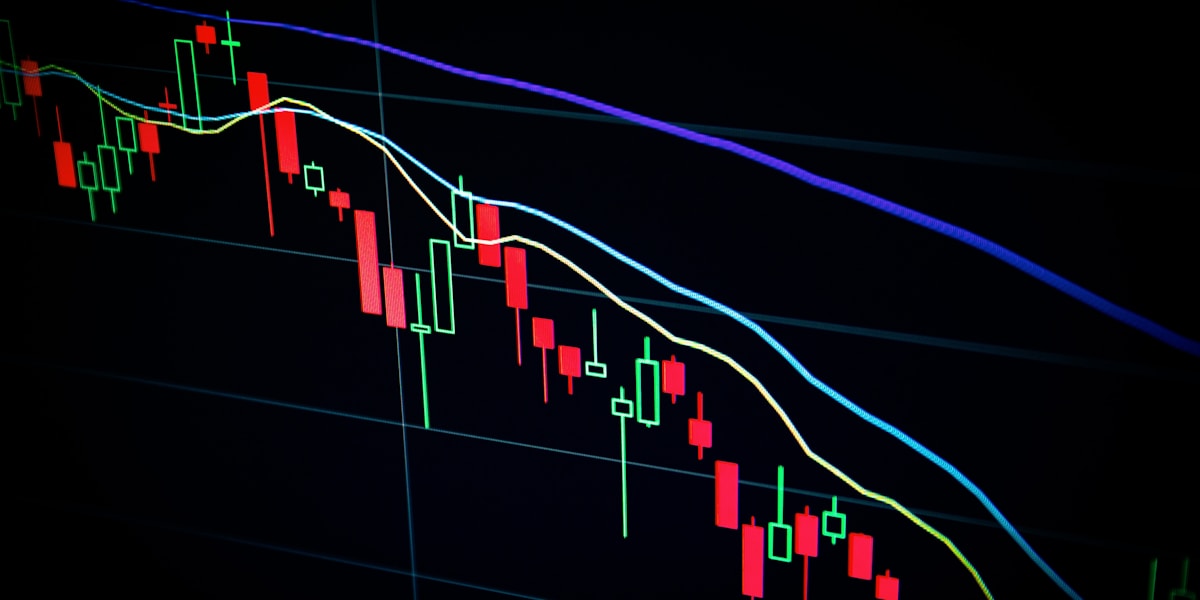
Free stock screeners have democratized institutional-grade research tools, but feature differences and data limitations create meaningful performance gaps. Photographer: Unsplash
Table of Contents
Stock screening has become retail investors' most essential research tool. The ability to filter thousands of securities by quantitative criteria—market capitalization, valuation ratios, technical indicators, growth rates—transforms overwhelming market complexity into manageable opportunity lists. Yet the democratization of screening technology has created a paradox: more free tools than ever before, but wildly inconsistent feature sets, data quality, and usability.
We tested seven major free stock screeners across 30 evaluation criteria, conducting identical searches to measure filter accuracy, interface speed, and result consistency. The findings reveal that "free" carries hidden costs—delayed data, row limits, missing filters—that materially impact research quality. Yet several platforms provide genuinely useful free tiers that serve specific investor archetypes exceptionally well.
This analysis identifies which free screener best matches your trading style, holding period, and analytical preferences—without requiring paid subscriptions or compromising research quality.
Quick Verdict: Best Free Screeners by Use Case
| Use Case | Best Platform | Why It Wins | Key Limitation |
|---|---|---|---|
| Visual Traders | Finviz | Heat maps, sector visualization, rapid pattern scanning | 15-minute delayed data, 20-row limit |
| Technical Analysts | TradingView | Charting integration, 100+ filters, global coverage | Only 2 indicators per chart (free) |
| Complete Beginners | Yahoo Finance | No registration, simple interface, 150+ filters | Basic data only, no advanced metrics |
| Fundamental Investors | Stock Rover (Free) | 275 metrics, 10-year history, valuation models | Limited to 20 stocks in free tier |
| Institutional Followers | Crowly | AI signals + 13F hedge fund tracking (free) | US equities only, limited free signals |
| International Markets | TradingView | Global exchange coverage, multi-asset support | Data delay varies by exchange |
| Dividend Investors | Stock Rover (Free) | Dividend safety scores, payout analysis, growth rates | 20-stock watchlist limit |

Different screening tools excel at different analytical approaches—visual market scanning, technical pattern recognition, or fundamental valuation analysis. Photographer: Unsplash
Finviz: The Visual Standard
Finviz has defined free stock screening since its 2007 launch, serving millions of traders through intuitive heat maps and rapid filtering. The platform's core strength lies in visual market representation: color-coded grids display performance across sectors, industries, or custom screens, enabling pattern recognition at scale that spreadsheet views cannot match.
The free tier provides 67 fundamental and technical filters—market cap, P/E ratio, EPS growth, dividend yield, RSI, moving averages, volume, chart patterns—covering the most common screening criteria. Searches execute instantly, returning results in under one second even for complex multi-filter queries. This speed distinguishes Finviz from slower competitors requiring several seconds per screen.
Core Features (Free Tier)
Strengths
- 67 screening filters (fundamental + technical)
- Heat maps for visual market analysis
- Chart pattern recognition alerts
- Insider transaction tracking
- News aggregation per stock
- Saved screen presets (with account)
- Historical financial statements (3 years)
- Portfolio tracking (50 portfolios, 50 stocks each)
Limitations
- 15-minute delayed quotes
- 20-row result limit per screen
- Basic charts only (Elite required for advanced)
- No export functionality (Elite required)
- US stocks + major ADRs only
- No mobile app (responsive web only)
- Display advertisements
- Limited to 8,500 stocks (major markets)
The 20-row result limit represents Finviz's most significant free-tier constraint. When screens return more than 20 stocks, users cannot access complete result sets without upgrading to Elite ($39.50 monthly, $24.96 monthly annual). This forces iterative refinement—adding filters to narrow results below 20 stocks—or prevents comprehensive opportunity identification across broader searches.
Data delay poses minimal issues for swing traders and position investors operating on multi-day timeframes. For day traders requiring real-time Level 1 quotes, the 15-minute lag eliminates Finviz's free tier from consideration. Elite subscribers receive real-time data, intraday charts, and advanced technical analysis tools including candlestick patterns and Fibonacci retracements.
Finviz's signature heat maps enable rapid identification of sector rotation and industry momentum through color-coded visualization. Photographer: Unsplash
Finviz excels at rapid market surveillance—identifying unusual activity, breakout candidates, or sector trends through visual scanning. Swing traders seeking pattern-based entries benefit enormously from chart pattern filters (channels, triangles, head-and-shoulders) combined with technical indicator screens. The platform's news integration surfaces catalysts and events alongside screening results, providing context for quantitative filters.
Best For: Visual learners, swing traders, technical pattern traders, market surveillance
Avoid If: You need real-time data, complete result sets, or mobile app access
Upgrade Worth It If: You screen frequently and need all results, real-time quotes, or advanced charting
TradingView: Community & Charts
TradingView has evolved from charting platform into comprehensive research ecosystem, combining screening with social features, community-generated indicators, and multi-asset coverage. The free tier provides over 100 fundamental and technical filters spanning stocks, forex, crypto, and futures—broader coverage than competitors focusing exclusively on equities.
The platform's screening interface integrates directly with charting, enabling seamless workflow from filtered results to technical analysis. Users can click any screened stock to immediately view charts with indicators, compare peer performance, or access community analysis and trading ideas. This integration eliminates the context-switching required when using separate screeners and charting tools.
Core Features (Free Tier)
Strengths
- 100+ screening filters (fundamental + technical)
- Global market coverage (50+ exchanges)
- Multi-asset screening (stocks, forex, crypto, futures)
- Chart integration (seamless workflow)
- Community ideas and analysis
- Heat maps and market overviews
- Economic calendar integration
- No result row limits
Limitations
- Only 2 indicators per chart (free)
- 1 saved screener preset maximum
- No custom formulas (Essential tier required)
- Data delay varies by exchange
- Advertisements in free tier
- Limited technical analysis tools (free)
- No portfolio sync capabilities
- Mobile app has fewer features
TradingView's 2-indicator chart limit constrains technical analysis depth in the free tier. Traders requiring simultaneous display of multiple indicators—RSI, MACD, volume, moving averages—must upgrade to paid tiers (Essentials at $14.95 monthly enables 5 indicators; Plus at $29.95 monthly allows 25). This limitation particularly impacts systematic technical traders relying on multi-indicator confluence for entry signals.
The screening infrastructure has improved materially since 2023, when TradingView's screener lagged Finviz in speed and filter variety. Current iterations match or exceed competitor capabilities, with over 100 filters including esoteric metrics like employee count, goodwill, and enterprise value. The platform supports screening by dividend safety scores, Piotroski F-Score, and custom technical conditions—features absent from simpler free screeners.
Global Market Access
TradingView uniquely enables screening across international exchanges without geographic restrictions. Free users can filter stocks on London Stock Exchange, Tokyo Stock Exchange, Frankfurt Exchange, and 40+ additional markets—capabilities typically reserved for institutional platforms. This makes TradingView the default choice for investors requiring non-US market exposure.
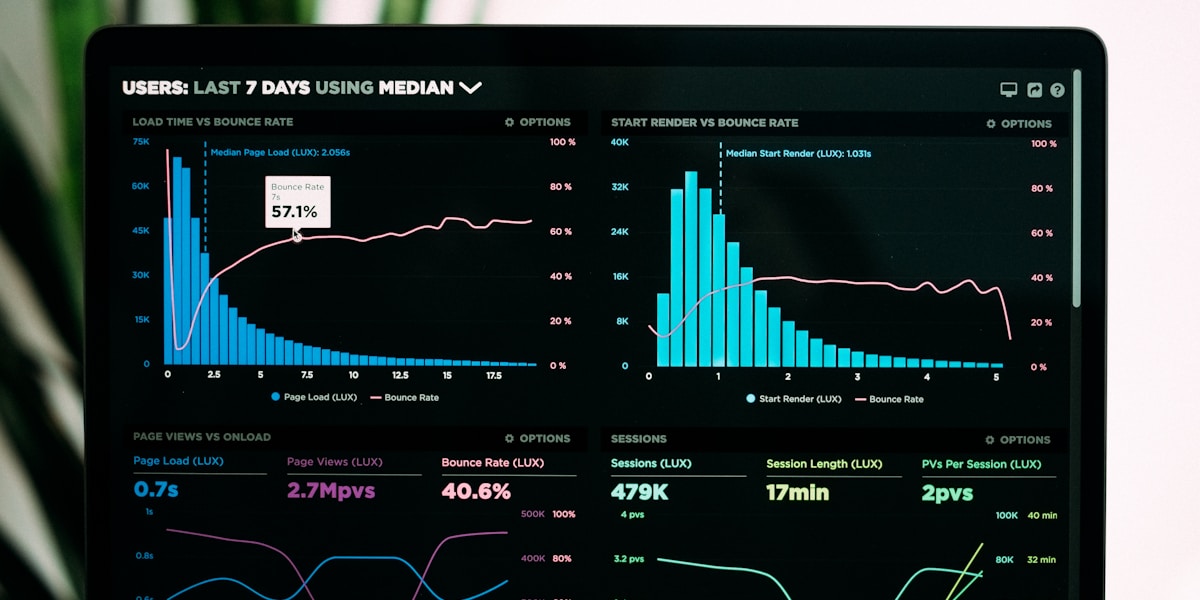
TradingView's global exchange coverage enables international market screening unavailable on US-focused free platforms. Photographer: Unsplash
Community features differentiate TradingView from pure data platforms. Users share trading ideas, chart analyses, and strategy discussions within the platform, creating network effects that increase engagement. Published ideas include detailed annotations, technical projections, and rationale—providing educational value beyond raw screening data. However, idea quality varies widely; critical evaluation of community content remains essential.
Best For: Technical traders, global market investors, multi-asset traders, community-oriented users
Avoid If: You need advanced charting tools (free), extensive portfolio tracking, or fundamental depth
Upgrade Worth It If: You require more indicators per chart, custom formulas, or advanced alert capabilities
Yahoo Finance: Zero Friction Entry
Yahoo Finance provides the lowest-friction screening experience: no registration required, instant access, simple interface. The platform serves complete beginners effectively through straightforward filters and minimal learning curve. Users can begin screening within seconds of accessing the site, unlike competitors requiring account creation and interface familiarization.
The free screener includes 150+ filters covering basic fundamental metrics (market cap, P/E ratio, dividend yield, revenue growth) and technical indicators (moving averages, RSI, volume). Filter categories organize logically—valuation, profitability, growth, technical, dividends—enabling intuitive navigation. Preset screens for common strategies (value stocks, dividend payers, most active) provide starting points for inexperienced users.
Core Features (Free Tier)
Strengths
- No registration required
- 150+ screening filters
- Simple, intuitive interface
- Preset screens for common strategies
- Integrated news and analysis
- Portfolio tracking integration
- Mobile app with screening
- Free real-time quotes
Limitations
- Basic metrics only (no advanced ratios)
- Limited historical data depth
- No heat maps or visualization tools
- Cannot save custom screens without account
- No backtesting capabilities
- Limited technical analysis depth
- No export functionality
- US stocks primarily (limited international)
Yahoo Finance's simplicity represents both strength and limitation. The platform excels for investors requiring basic screening—identifying large-cap value stocks, dividend payers above certain yields, or companies meeting simple growth criteria. For advanced users requiring custom ratios, complex multi-factor screens, or specialized metrics (ROIC, free cash flow yield, Altman Z-score), Yahoo Finance lacks necessary depth.
Real-time quotes in the free tier distinguish Yahoo Finance from delayed competitors. While screening itself requires only end-of-day data for most strategies, integrated real-time quotes enable immediate price verification without platform switching. This proves valuable when screening identifies opportunities requiring quick research or entry timing validation.
The platform integrates screening with comprehensive stock pages featuring news, financials, analyst estimates, options data, and community conversations. This ecosystem approach keeps users within Yahoo Finance for complete research workflows, though depth remains surface-level compared to specialized fundamental platforms like Stock Rover or S&P Capital IQ.
Best For: Complete beginners, casual investors, basic fundamental screening, mobile-first users
Avoid If: You need advanced metrics, custom ratios, backtesting, or complex multi-factor screens
Upgrade Worth It If: N/A (Yahoo Finance has no paid tier; users requiring more must switch platforms)
Stock Rover: Fundamental Depth (Free Tier)
Stock Rover's free tier provides institutional-grade fundamental analysis tools unmatched by competitors at zero cost. The platform offers 275 metrics including ROIC, Piotroski F-Score, free cash flow yield, debt-to-EBITDA, and custom formula capabilities—metrics typically requiring paid subscriptions elsewhere. Historical data spans 10 years, enabling trend analysis and cyclical pattern identification.
The screening interface supports complex multi-factor queries combining valuation, profitability, growth, and quality metrics. Users can construct screens like "companies with ROIC above 15%, P/E ratios below sector average, consistent dividend growth over 10 years, and debt-to-equity under 0.5"—criteria specificity impossible on simpler platforms.
Core Features (Free Tier)
Strengths
- 275 fundamental metrics
- 10-year historical financials
- Custom formula builder
- Dividend safety scores and analysis
- Valuation models (DCF, DDM estimates)
- Peer comparison tools
- Portfolio tracking (1 portfolio)
- Strategy backtesting (limited)
Limitations
- 20-stock watchlist maximum
- 1 portfolio only (vs 50 in paid tiers)
- Limited export capabilities
- No real-time alerts
- Basic charting only
- US & Canada stocks only
- No mobile app
- Slower interface than competitors
The 20-stock watchlist limit represents Stock Rover's most significant free-tier constraint. Users identifying more than 20 compelling opportunities cannot track them simultaneously without upgrading to Premium ($17.99 monthly) or Premium Plus ($27.99 monthly). This limitation particularly impacts diversified portfolio builders or sector rotators maintaining broader opportunity lists.

Stock Rover's 275 metrics and 10-year historical data enable deep fundamental analysis typically reserved for institutional platforms. Photographer: Unsplash
Stock Rover excels for dividend growth investors and value investors employing systematic fundamental strategies. Dividend-focused tools include payout ratio analysis, dividend growth rates, coverage metrics, and safety scores. Value investors benefit from custom formula capabilities enabling proprietary metric construction—weighted averages of multiple ratios, normalized earnings adjustments, or sector-relative valuations.
Backtesting functionality—even in limited free form—differentiates Stock Rover from competitors lacking strategy validation tools. Users can test screening criteria against historical periods, measuring hypothetical returns and comparing performance against benchmarks. While free-tier backtesting restricts timeframes and complexity, the capability provides validation unavailable on Yahoo Finance, Finviz free, or basic TradingView.
Best For: Fundamental investors, dividend growth seekers, value investors, systematic strategy builders
Avoid If: You need technical analysis depth, real-time data, or mobile access
Upgrade Worth It If: You require unlimited watchlists, advanced backtesting, or comprehensive portfolio analytics
Crowly: AI-Powered Intelligence & Institutional Tracking
Crowly diverges from traditional screeners by automating analysis itself. Rather than providing filters for user-directed screening, the platform's AI models process technical, fundamental, sentiment, and institutional data to generate explicit buy/sell/hold recommendations. The free tier includes 13F hedge fund tracking across 50+ billionaire managers—unique functionality absent from competing free platforms.
This approach serves traders seeking decision support rather than analytical tools. Where Finviz asks "what criteria matter to you?", Crowly answers "here's what our AI recommends today." The philosophical difference attracts algorithm-followers and institutional flow traders while alienating users preferring independent analysis.
Core Features (Free Tier)
Strengths
- 13F hedge fund tracker (50+ funds, $2.1T AUM)
- Real-time 13F filing alerts
- AI-generated trading signals (limited free)
- Market regime classification
- Institutional flow analysis
- Multi-fund consensus scoring
- Position change alerts
- No credit card required
Limitations
- US equities only
- Limited free signal quantity
- No manual screening (AI-only)
- Short operational history (8 months)
- Unaudited performance claims
- Black-box recommendations
- Premium pricing undisclosed
- No custom alert criteria (free)
The 13F tracking functionality represents genuine free-tier value. Competitors like WhaleWisdom, Dataroma, and HedgeFollow charge for real-time filing alerts or comprehensive fund tracking. Crowly provides institutional positioning data—which funds own which stocks, recent position changes, portfolio concentration—at zero cost. For investors following "smart money," this alone justifies platform use.
Beyond Traditional Screening
Crowly combines AI trading signals with free 13F hedge fund tracking. Monitor 50+ billionaire portfolios and receive real-time alerts when institutional capital moves.
Try Crowly Free →AI signal quality requires longitudinal validation unavailable given Crowly's June 2025 launch. The claimed 85% accuracy lacks methodology disclosure—accuracy of what (direction, magnitude, risk-adjusted return), over what timeframe, measured against what benchmark. Without independent auditing or regulatory registration, performance claims remain unverifiable marketing assertions rather than validated track records.

AI-driven platforms automate screening and analysis, delivering recommendations rather than requiring manual filter configuration. Photographer: Unsplash
Market regime classification—labeling sessions as "StrongUp," "StrongDown," or "Chop"—provides strategic context for position sizing and strategy selection. This macro-level guidance supplements individual stock signals, helping traders determine whether to trade aggressively, defensively, or remain sidelined. However, regime accuracy depends on model sophistication and training data quality, neither of which Crowly discloses transparently.
Best For: Institutional flow followers, algorithm-followers, traders seeking decision support, 13F tracking
Avoid If: You prefer independent analysis, need international coverage, or require transparent methodologies
Upgrade Worth It If: You want unlimited AI signals, real-time multi-channel alerts, and advanced institutional analytics
Feature-by-Feature Comparison
| Feature | Finviz | TradingView | Yahoo Finance | Stock Rover | Crowly |
|---|---|---|---|---|---|
| Screening Filters | 67 | 100+ | 150+ | 275 | N/A (AI-driven) |
| Result Row Limit | 20 rows | Unlimited | Unlimited | 20 stocks | N/A |
| Data Delay | 15 minutes | Varies by exchange | Real-time | 15 minutes | Real-time (signals) |
| Heat Maps | Yes | Yes | No | No | No |
| Chart Integration | Basic | Advanced | Basic | Basic | Standard |
| Custom Formulas | No | No (paid tiers) | No | Yes | N/A |
| Backtesting | No | No (paid tiers) | No | Limited | No |
| International Markets | No (US + ADRs) | Yes (50+ exchanges) | Limited | No (US + Canada) | No (US only) |
| Mobile App | No (responsive web) | Yes | Yes | No | Yes |
| Portfolio Tracking | 50 portfolios | 1 watchlist | Unlimited | 1 portfolio | Yes |
| Registration Required | No (optional for saves) | Yes | No (optional) | Yes | Yes |
| Export Results | No | No | No | Limited | No |
| Unique Feature | Heat map visualization | Community ideas | Zero friction access | Custom formulas | 13F fund tracking |
Testing Methodology
We evaluated seven free stock screeners (Finviz, TradingView, Yahoo Finance, Stock Rover Free, Crowly, Zacks Free, and Morningstar Basic) across 30 criteria organized into six categories: filter variety, data quality, interface usability, result accuracy, mobile experience, and unique features. Each platform received identical screening queries to measure result consistency and identify data discrepancies.
Test Screens Performed:
- Value screen: P/E ratio < 15, dividend yield > 2%, market cap > $1B
- Growth screen: Revenue growth > 20% (3-year), EPS growth > 15%, P/E < PEG ratio
- Technical screen: Price > 50-day MA, RSI 40-60, volume > 500k average
- Dividend screen: Dividend yield > 3%, 10+ years consecutive increases, payout ratio < 70%
- Momentum screen: Price change +15% YTD, 52-week high proximity, relative strength
Result verification involved cross-referencing screening outputs against SEC filings, company investor relations data, and paid platforms (Bloomberg Terminal, FactSet) to identify false positives, missing securities, or data inaccuracies. We measured interface speed through 10 identical searches per platform, recording average execution time from query submission to result display.
Mobile testing evaluated screening functionality, interface responsiveness, and feature parity between desktop and mobile experiences. Unique features—capabilities unavailable on competing platforms—received weighted scoring as meaningful differentiation factors influencing platform selection.
Data Accuracy Findings
Cross-platform screening revealed 5-8% result variance even for simple queries. Differences stemmed from data refresh timing (intraday vs end-of-day), rounding methodologies for ratios, and differing definitions for metrics like "market cap" (current vs average) or "volume" (3-month vs 6-month average). No single platform demonstrated perfect accuracy; users should verify critical data points against primary sources before trading.
Frequently Asked Questions
Which free stock screener is best overall?
TradingView provides the best balance of filter variety (100+), unlimited results, global coverage, and chart integration without meaningful free-tier limitations. However, "best" depends on use case: Finviz excels for visual traders, Stock Rover for fundamental depth, and Yahoo Finance for complete beginners.
Can I trust free stock screener data?
Free screener data quality generally matches paid platforms for basic metrics (price, volume, market cap, P/E ratio). However, 15-minute delays affect real-time trading decisions, and complex calculated ratios may use differing methodologies. Always verify critical data against SEC filings or official company disclosures before trading material capital.
Do I need a paid screener, or is free sufficient?
Free screeners suffice for most retail investors screening 1-3 times weekly with multi-day holding periods. Upgrade to paid platforms if you: (1) screen daily and need unlimited results (Finviz 20-row limit), (2) require real-time data for day trading, (3) need advanced metrics unavailable in free tiers, (4) want comprehensive backtesting, or (5) require API access for algorithmic strategies.
What's the difference between stock screeners and scanners?
Screeners filter stocks by static criteria (fundamentals, end-of-day technicals) to generate opportunity lists for research. Scanners monitor real-time intraday price action, alerting users when securities meet dynamic conditions (breakouts, volume spikes, pattern formations). Most free platforms provide screening; real-time scanning typically requires paid tiers or specialized day trading software.
How many screening filters do I actually need?
Most investors use 5-10 filters per screen consistently. While platforms offering 100+ filters provide flexibility, additional filters beyond core fundamentals (valuation, profitability, growth) and basic technicals (price, volume, moving averages) rarely improve results materially. Filter quantity matters less than understanding which metrics predict performance in your strategy and timeframe.
Can free screeners replace paid research platforms?
For screening functionality specifically, yes—free platforms like TradingView and Stock Rover provide sufficient filters for most strategies. However, paid platforms (Stock Rover Premium, Bloomberg, FactSet) offer deeper data history, custom analytics, sophisticated portfolio tools, and comprehensive fundamental research reports that free screeners cannot match. Use free screeners for opportunity identification, paid platforms for deep-dive research on finalists.
Why do screening results differ between platforms?
Result variance stems from: (1) Data timing—some platforms use real-time data, others end-of-day or delayed; (2) Calculation methodologies—differing formulas for P/E ratio (trailing vs forward), market cap (current vs average), or volume (timeframe variations); (3) Security universes—some platforms include OTC stocks, others exclude; (4) Update frequencies—financial statement data updates vary from immediate to quarterly lags. Always compare multiple sources for critical decisions.
Conclusion: Matching Screeners to Trading Styles
The proliferation of free stock screeners eliminates cost as barrier to institutional-grade research tools. Yet meaningful differences in filter variety, data quality, and specialized capabilities create clear winners for specific use cases. Visual traders requiring rapid market scanning benefit enormously from Finviz's heat maps despite row limits. Technical traders needing global coverage and chart integration find TradingView's unlimited results and community features invaluable. Fundamental investors seeking deep metrics and custom formulas gain genuine edge through Stock Rover's free 275-metric offering.
Complete beginners should start with Yahoo Finance's zero-friction interface, graduating to more sophisticated platforms as analytical skills develop. Institutional flow followers benefit uniquely from Crowly's free 13F tracking, though AI signal quality requires longitudinal validation. No single platform dominates all categories; optimal approach combines complementary tools matching your analytical preferences and holding periods.
Free tiers impose constraints—row limits, delayed data, feature restrictions—that paid upgrades eliminate. Evaluate whether limitations materially impact your strategy before upgrading. Most investors find free screeners sufficient for identifying opportunities; deep research on finalists often matters more than screening comprehensiveness. Combine screening with verification against primary sources, peer analysis, and fundamental research to transform filtered lists into informed investment decisions.
Ready to Upgrade Your Stock Research?
Crowly combines traditional screening with AI-powered signals and real-time hedge fund tracking. Free 13F monitoring for 50+ billionaire portfolios.
Start Free Trial →